I grew up in the inland of mainland China, which is called the Central Plains; in fact, it wasn’t until I was in my 20s that I went out of my hometown and had my first time seeing the giant mountains and seas; before that, they were only seen in media such as on TV, in graphic books, or in art such as traditional ink paintings.
Growing up with my grandparents gave me a chance to connect to the cultural heritage that is passed down generationally but was somehow quite interrupted during my parents’ generation due to the Cultural Revolution; fortunately, my grandma taught me traditional Chinese calligraphy hand-by-hand when I was young, which became the key to unlocking the traditional Chinese ink painting practice, where I found it precisely connected to the calligraphy practice that I had back then.
I wasn’t aware of this before until I started in January this year to practice traditional Chinese ink painting madly, like, obsessed; I realised that each line in the traditional ink painting was a stroke of calligraphy writing, decomposed from words, and then recomposed into forms of trees, leaves, stones, rocks, houses, grasses, mountains, rivers, and even shadows, clouds, etc.
If you look closely at the traditional Chinese ink paintings, each stroke is very different from Western brush technique, as it has a starting and an ending, or the entry or exit of the stroke, which either reveals or conceals the tip, as traditional calligraphy techniques commonly require. In Asian philosophy, each stroke carries Qi (the “energy” or “force” in English), which moves within each stroke from one end to the other, like Tai Chi. Historically, calligraphy and painting cannot be separated in scholar studies.
This focus also directly shaped the aesthetic of this body of work, and one key reason I chose black aluminium mesh is that it can represent the brushstrokes of gestural ink painting. On top of that, this material almost perfectly embodies this sense of permeability, openness, lightness, and vulnerability, which I found my migrant position often carries. I think of Maunga in Te ao Māori. They’re not just physical landmarks; they carry identity, ancestry, and spiritual connection. Similarly, in Chinese culture, sometimes we say, “I live on which hill, I belong to which hill, or I come from which hill” when introducing ourselves in conversation. Location here is more than a mountain; it’s a symbol of home, heritage and belonging.
We are embedded in different cultural memories; between them there is a horizon line. For migrants, this cultural boundary is constantly negotiating its space; whether it’s adapting marmite on toast or not, negotiation exists every moment as long as different cultural memories coexist in one being. That’s where this body of work lies, on the ground but without a fixed horizon line, because each step viewers take in travelling reconfigures the contour lines and brings the unfixed horizon into view. For me, it is a new memory-space I created for open encounters; for the viewers, each would re-create their own memory-space where familiarity and unfamiliarity meet at the scene, and it itself regenerates the condition of this body of work.
— September, 2026.
We Borrowed Our Sense of Distance from the Beyond, 2026. Exhibition view at DSA gallery, Dunedin.
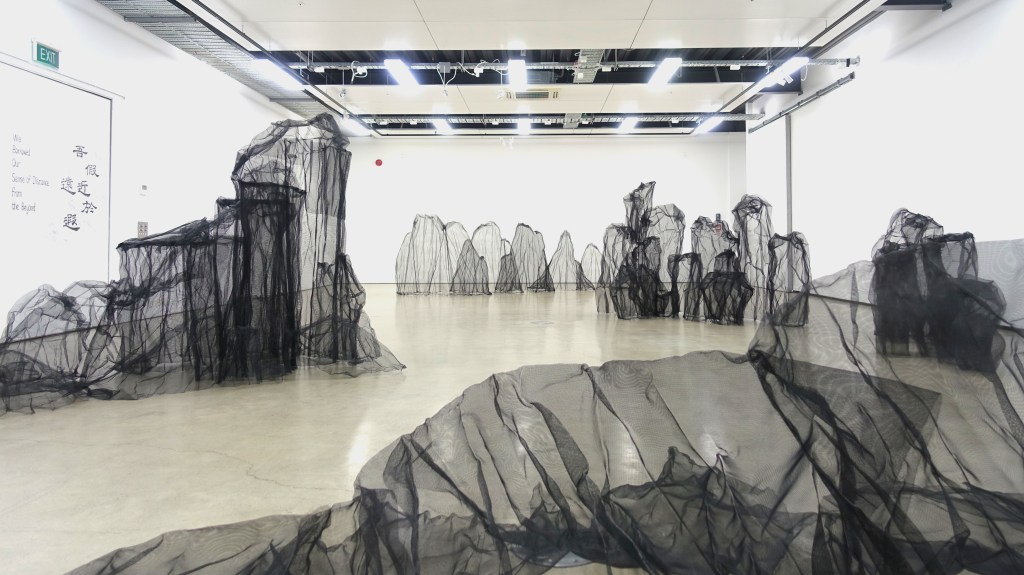
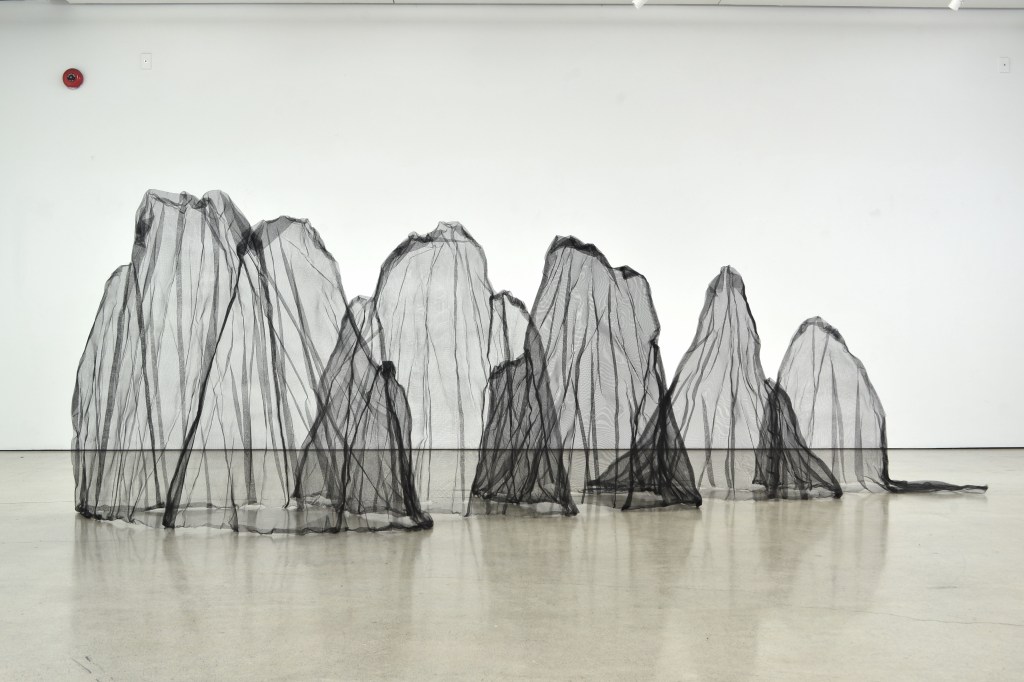
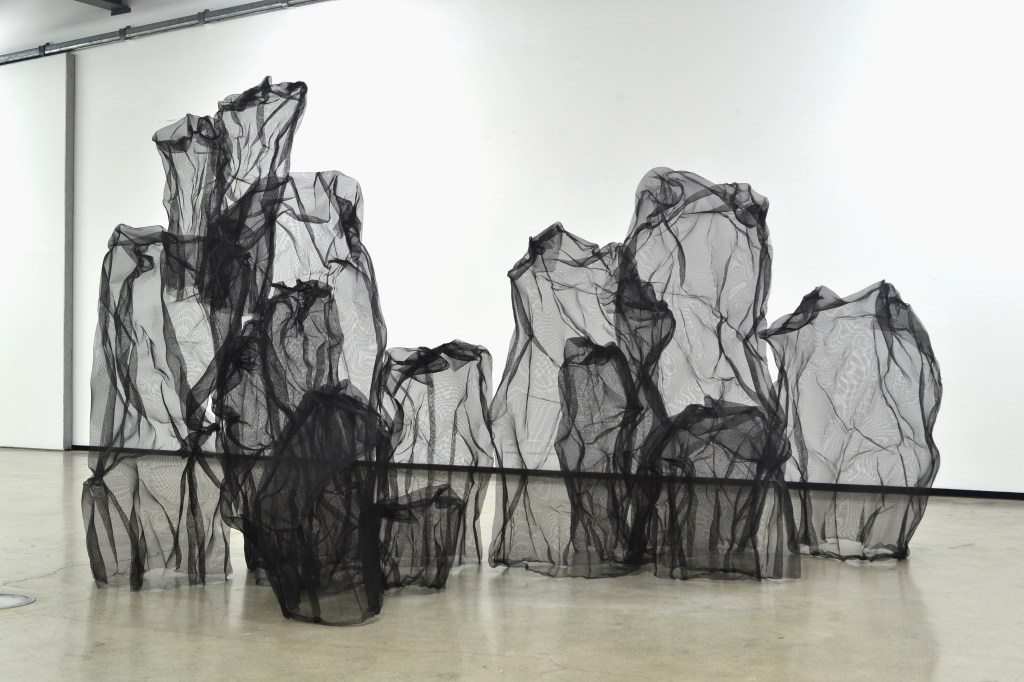
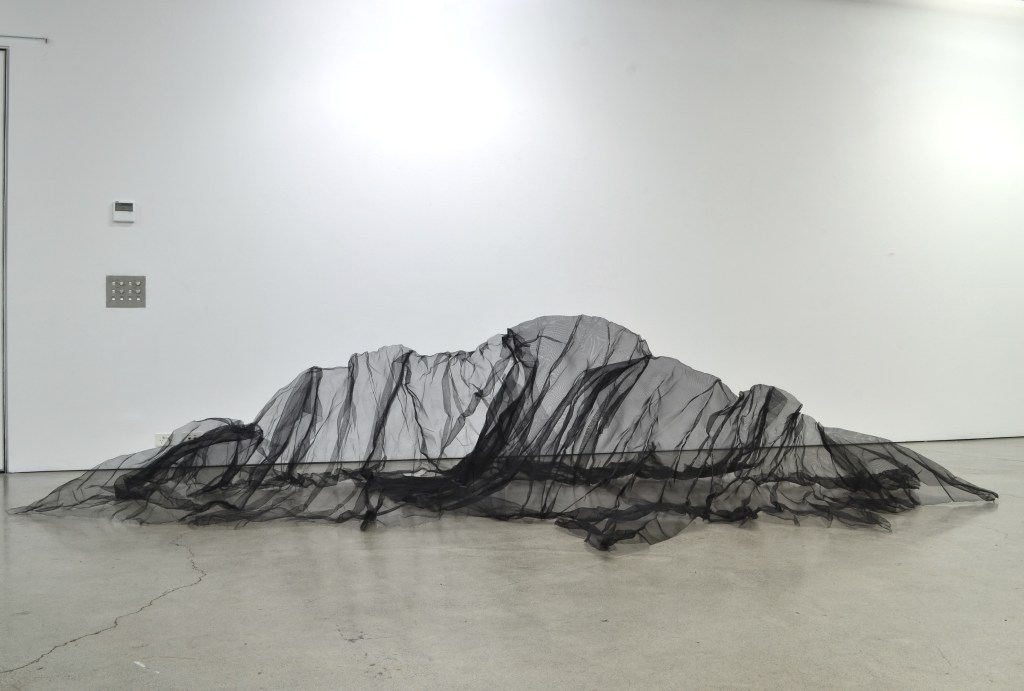
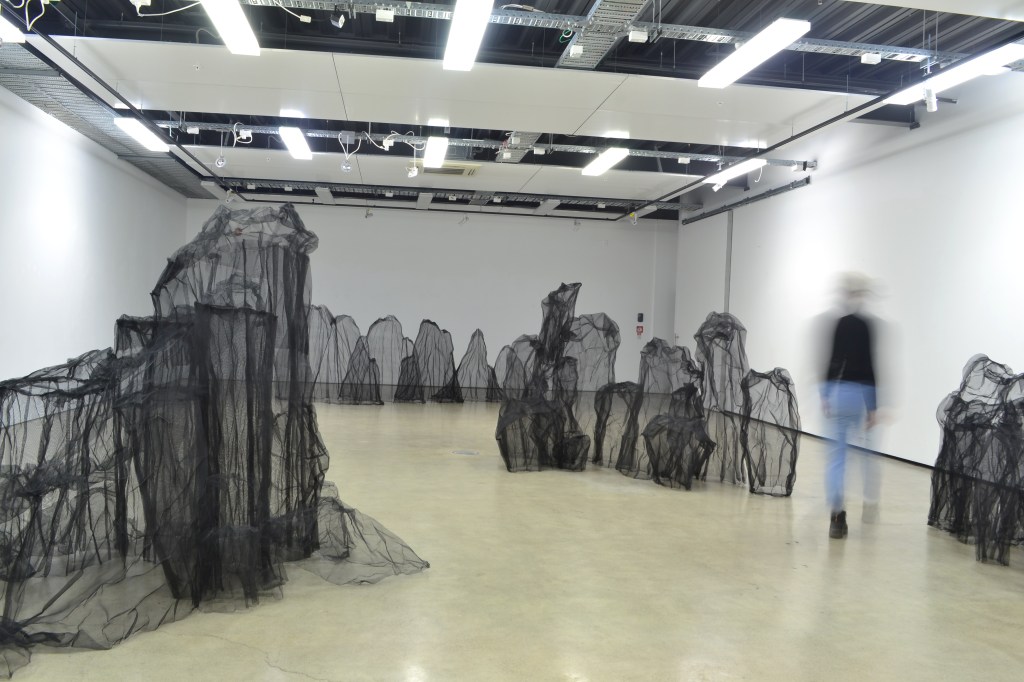
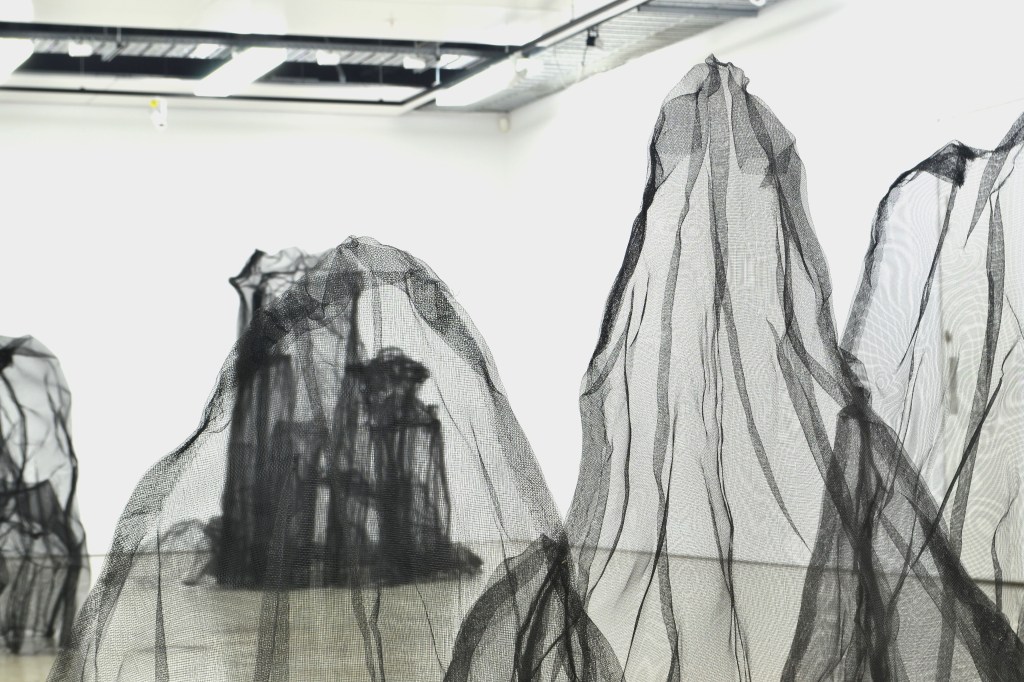
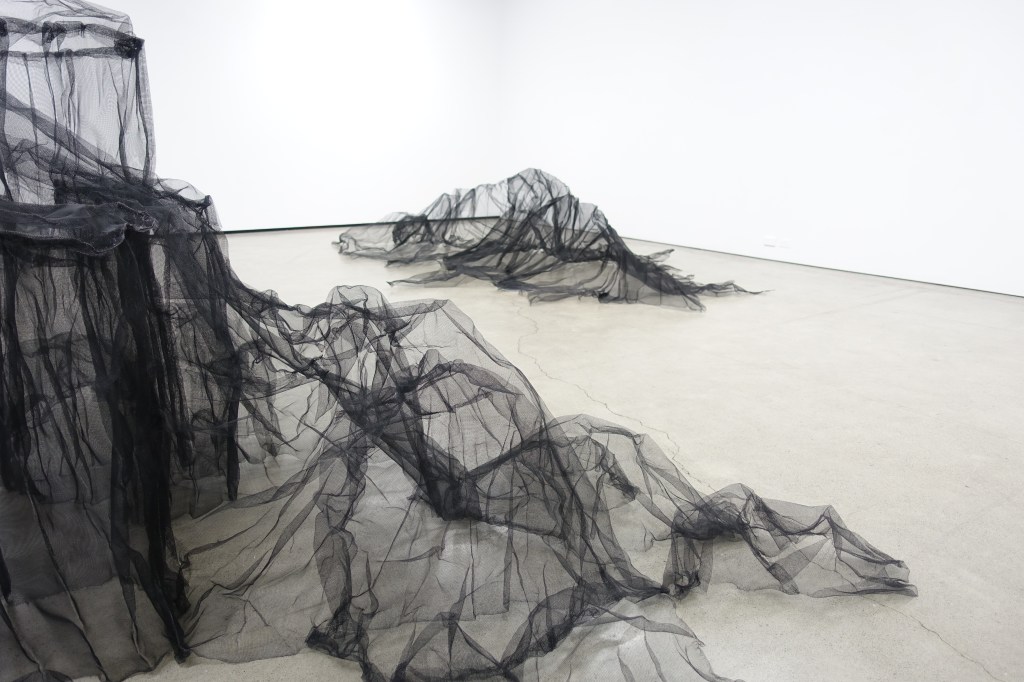
Photo Copyright: John Tregonning

