I’ve been thinking about what makes a vessel so immediately recognisable as a vessel and what unfamiliar possibilities still lie hidden, waiting to emerge. With its 20,000-year history intertwined with human life, pottery has profoundly shaped our aesthetics, embedding in us a sense of home, culture, and community—values tied deeply to tradition. Yet, this familiarity also carries a limitation. It’s as if we are caught in a cycle, a box that restricts our imagination. No one can truly escape their culture; we are all shaped by it, products of countless generations of cultural practices passed down through time. And in this, there’s something both comforting and unnerving.
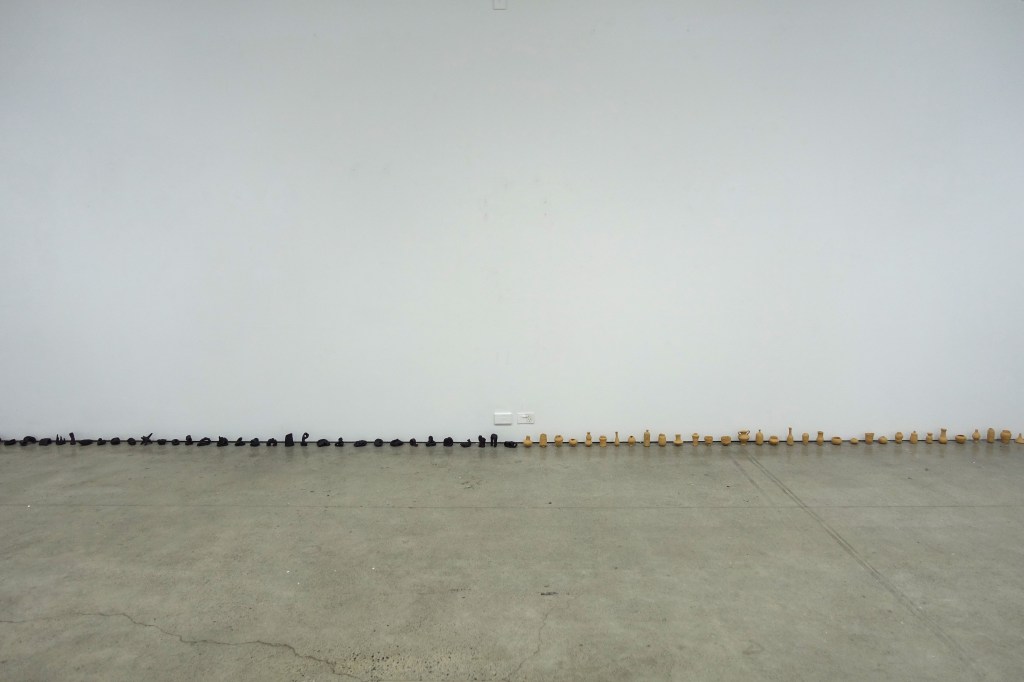
The vessels are hand-pinch stoneware. Each follows traditional forms but with intentional variations that introduce cultural diversity. Each abstraction piece’s surface is adorned with iron oxide treatments, historically tied to pottery glazing techniques. Yet, in the fire, iron oxide blurs the materiality between ceramic and metal, symbolising the transformation between the known and the unknown.
This project aims to provoke reflection on how our cultural history shapes both our artistic sensibilities and the limitations those histories impose. By creating one hundred familiar objects and one hundred abstract forms, I invite the viewer into a dialogue about the tension between what we recognise and what we have yet to imagine within the context of one of the oldest art forms in human history. Ultimately, the work will serve as both a celebration and a critique of our inherited cultural practices, exploring the comforting and unsettling aspects of our connection to the past.
This work has been selected as a finalist for Portage Ceramic Award 2025.
One Hundred Familiars, One Hundred Unknowns. 2025


 Eva During 伊娃卓灵